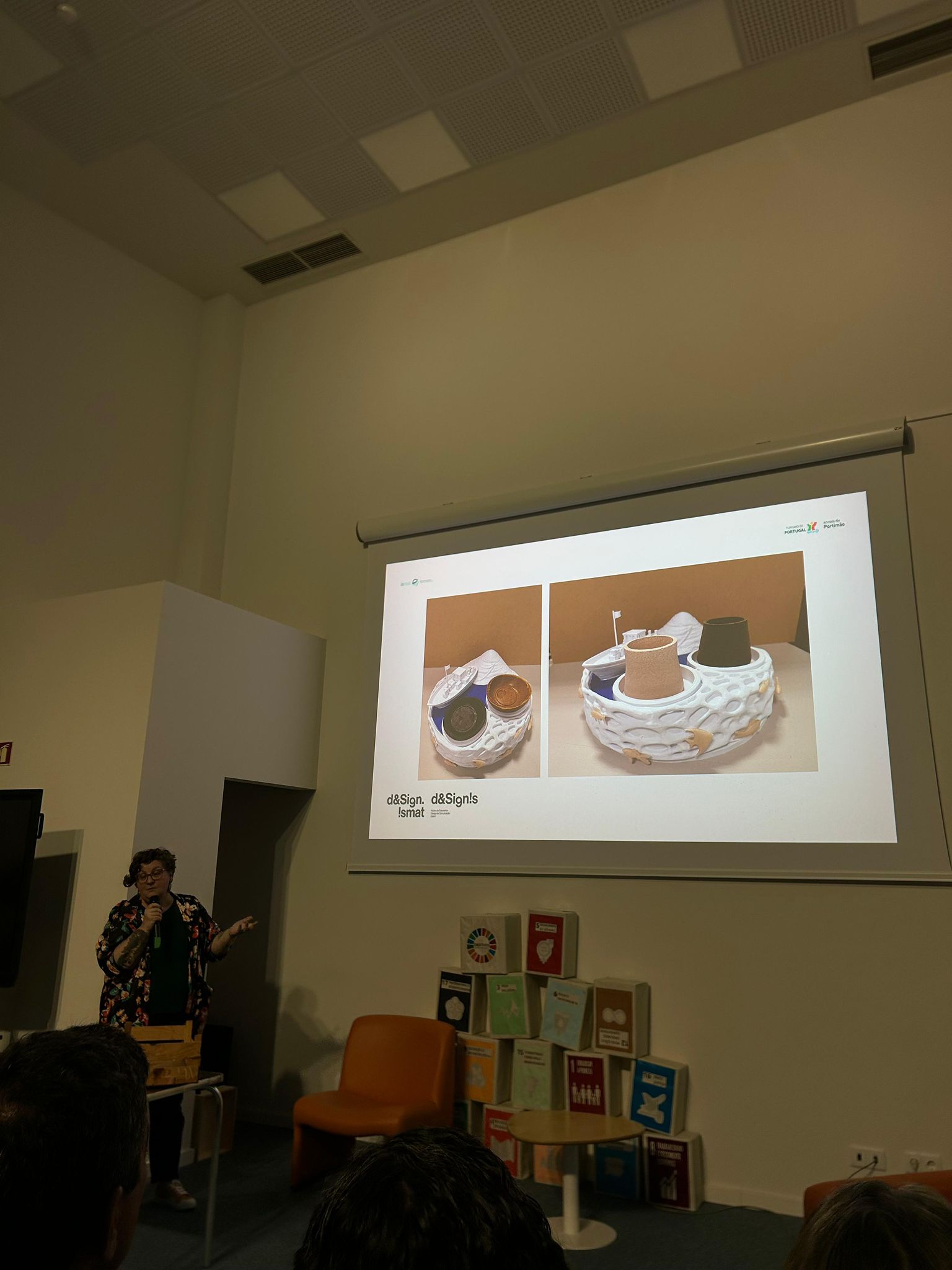
Using hospitality biowaste, students developed biodesign objects under the theme “Circularity with Creativity.”
The ISMAT Communication Design programme developed a project in partnership with the Portimão School of Hospitality and Tourism as part of Green Summit 2026, the annual meeting of the Turismo de Portugal school network dedicated to sustainability and innovation, held on March 23 and 24.
The proposal was launched within ISMAT’s Communication Design degree with the aim of creating a set of biodesign objects from bio-waste generated through the school’s hospitality and training activities.
The challenge was integrated into the Start Up Junior course unit, where students are encouraged to work within an agency-like framework, responding to real briefs with creative, strategic, and applied solutions.
The project was supported by Professors Américo Mateus and Rui Barroca, reinforcing the connection between teaching, material experimentation, and responses to concrete contexts. Based on the proposed brief, ISMAT Communication Design students were challenged to conceive the event’s main object, the symbolic item to be passed on to the next host school, as well as other related communication supports.
Among the proposed outcomes were the creation of a symbolic object linked to the identity of Portimão and the Algarve, with references to the maritime universe and the sardine, a traditional icon of the region, as well as a reusable photo frame and visual accessories for use during the event.
All objects were conceived using materials such as coffee grounds, eggshells, potato peels, egg carton cardboard, and cork stoppers, in line with the event’s central message: “Circularity with Creativity.”
This collaboration highlighted the role of ISMAT’s Communication Design programme in articulating design, sustainability, territory, and innovation, demonstrating the students’ ability to respond to real challenges through experimental processes and solutions with material, symbolic, and communicative impact.