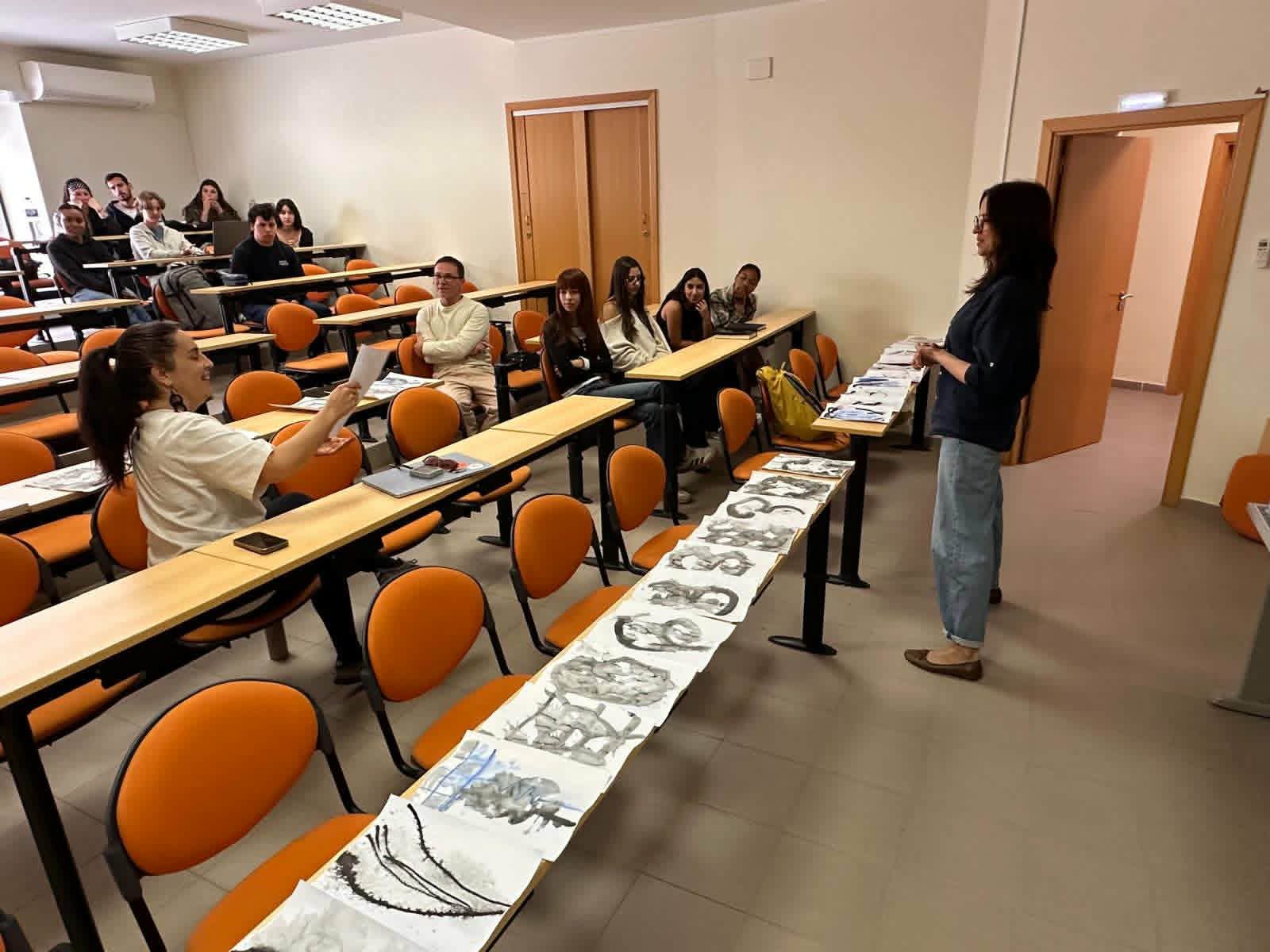
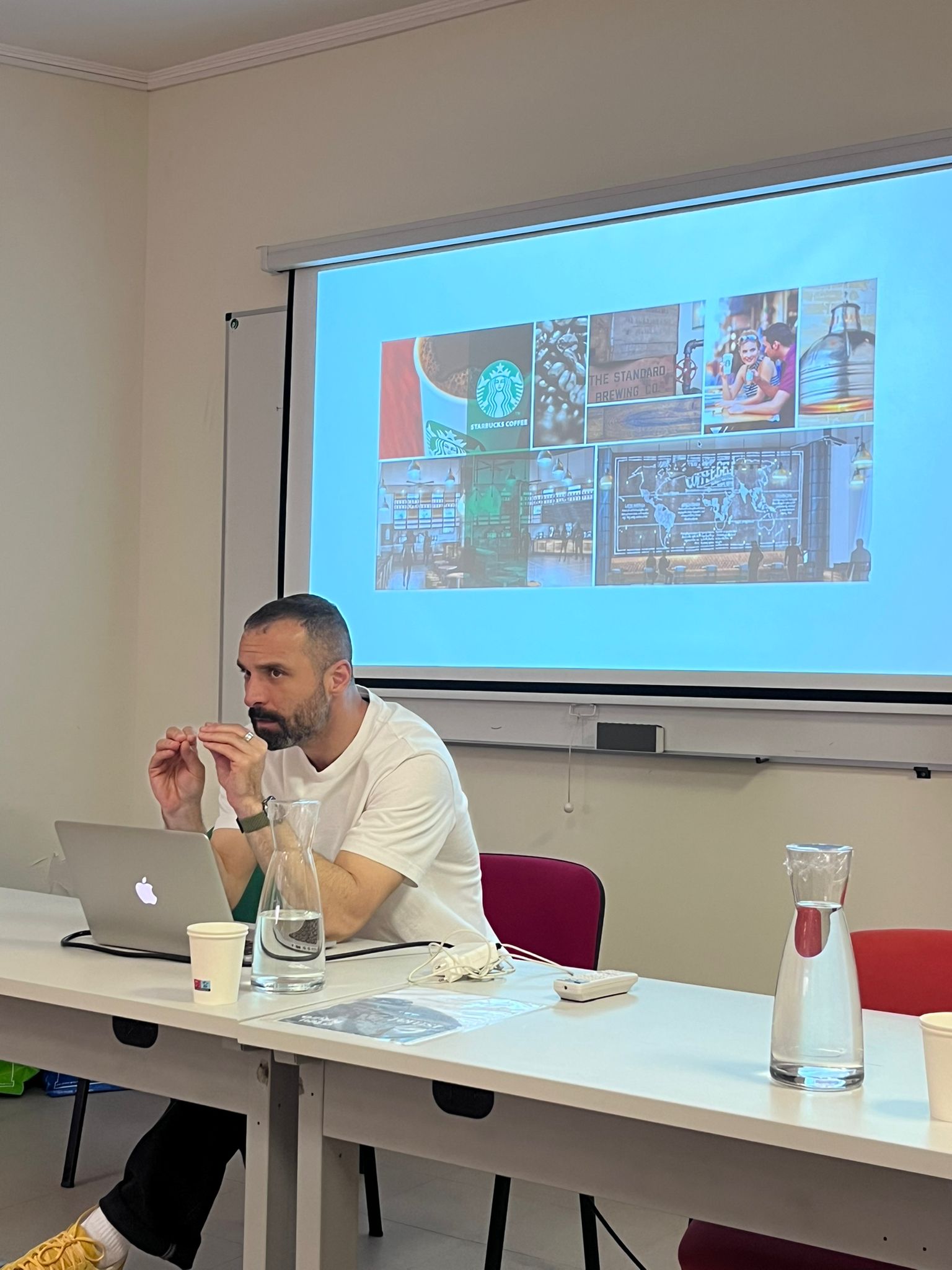
Between May 4th and 7th, ISMAT's DAAD (Department of Architecture, Arts, and Design) brought together four international faculty members for workshops and global debates.
Between May 4th and 7th, 2026, the Department of Architecture, Arts, and Design (DAAD) held its 1st International Week, an initiative dedicated to knowledge sharing, internationalization, and disciplinary intersection across the fields of architecture, arts, and design.
Throughout the week, DAAD welcomed four international professors—Dragomira Nikolova, Alek Slon, Onur Mengi, and Magda Fokt—who facilitated sessions, workshops, and moments of reflection on diverse topics, ranging from the relationship between architecture, biology, and the psychology of space, to drawing, creative processes, design innovation methodologies, and abstract artistic expression.
The initiative saw active participation from Design and Architecture students, providing a significant opportunity to connect with different pedagogical practices, cultural references, and international working methodologies.
More than just a collection of isolated sessions, this week represented a moment of opening the school to the world, allowing students to broaden their horizons, confront new ways of thinking about project design, and understand the importance of interdisciplinarity in today's education.
The presence of the guest professors also reinforced the multidisciplinary dimension of the Department, demonstrating how drawing, technology, creative processes, space, innovation, and sciences can dialogue with one another.
This convergence of distinct fields proved to be particularly enriching for the academic community, creating a space for shared learning and contact with perspectives that transcend geographical, cultural, and disciplinary boundaries.
The 1st DAAD International Week thus establishes itself as an important initiative for consolidating the international network of the Department of Architecture, Arts, and Design, contributing to a more open, critical, and global education for its students.
By promoting encounters among faculty, researchers, artists, and future professionals, the event reinforced DAAD's commitment to an education built upon collaboration, experimentation, and the construction of knowledge beyond borders.