Professor Susana Leonor opens the 8th Sustainable Campus Conference with a vision for “the learning campus”
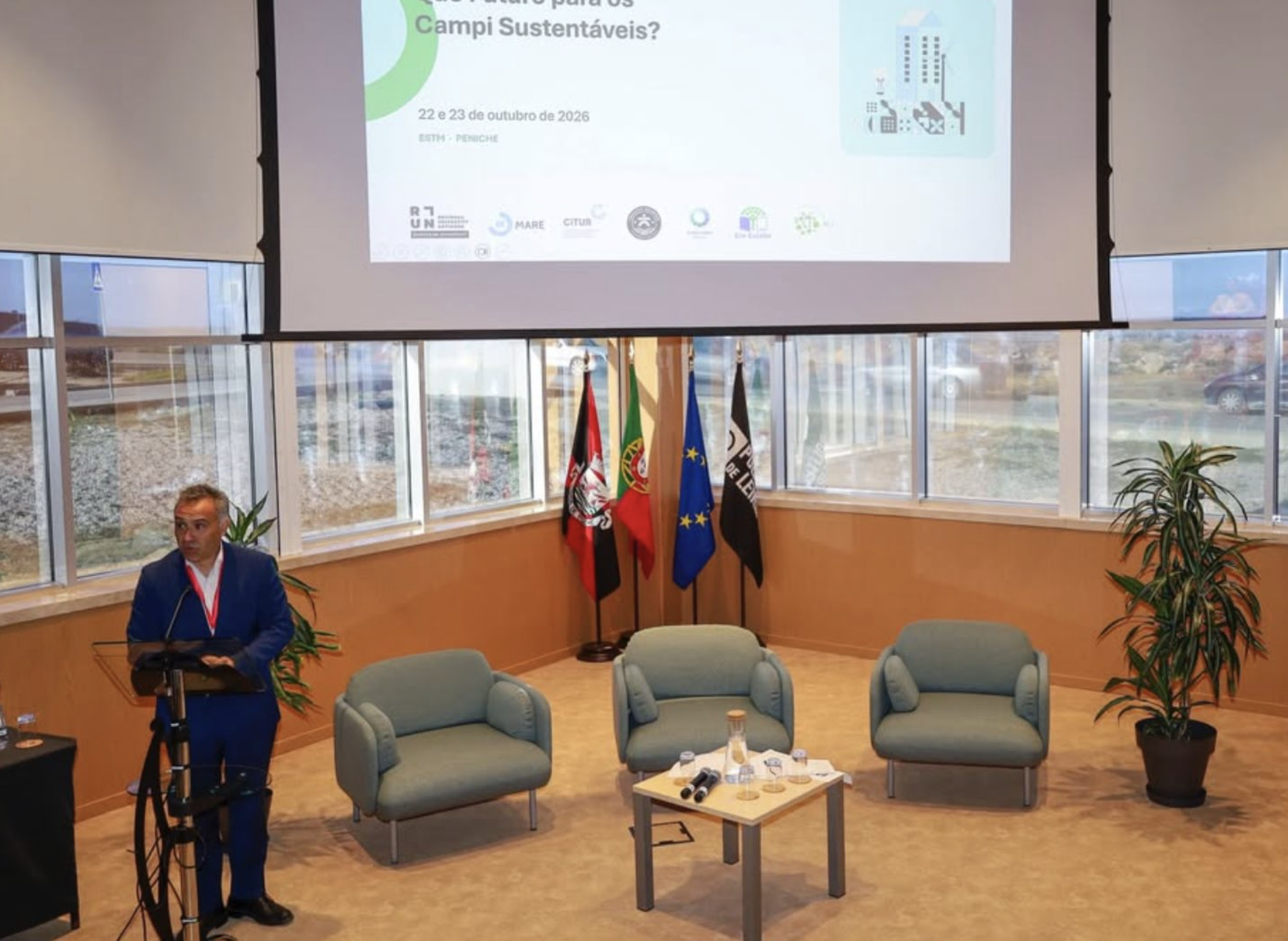
Professor Susana Leonor, director of the Bachelor's degree in Design and the Master's degree in Biodesign at ISMAT and researcher at LIDA – ESAD.CR., delivered the opening plenary session of the 8th Sustainable Campus Conference (CCS 2026), held on October 22 and 23 at the School of Tourism and Maritime Technology in Peniche. The event was promoted by the Sustainable Campus Network, Portugal, under the theme “What future for sustainable campuses?”.
The session was attended by the Vice-Rector of the University of Leiria and Oeste, Professor Sérgio Leandro, the Director of the School of Tourism and Maritime Technology, Professor Teresa Mouga, and representatives from the Sustainable Campus Network.
In her speech “From Strategy to Action: Challenges for a Sustainable Campus”, the professor reflected on the role of universities in the transition toward sustainability.
She began with an observation: higher education institutions already have strategies, commitments, and many good initiatives, but these do not always function as a cohesive whole. They lack a common purpose and a holistic vision.
The proposal is based on two key concepts: Circularity and the Sustainable Development Goals, arguing that sustainability is only achieved when the environmental, economic, and social dimensions are interconnected. In this articulation, people and communities serve as the connecting thread.
The university thus emerges not merely as a place where sustainability is taught, but as a community of practice, centered on ecologies, especially social ones.
As an example, she presented ISMAT's experience in the European project CoCoon. In this project, biodesign and sustainability were tackled collaboratively across multiple degree programs within a shared laboratory space.
The presentation concluded with a transdisciplinary vision for the future: “the learning campus”. It is a campus where people, nature, and technology work together, and where the campus itself becomes the curriculum, with its spaces transformed into places of learning, research, and care.
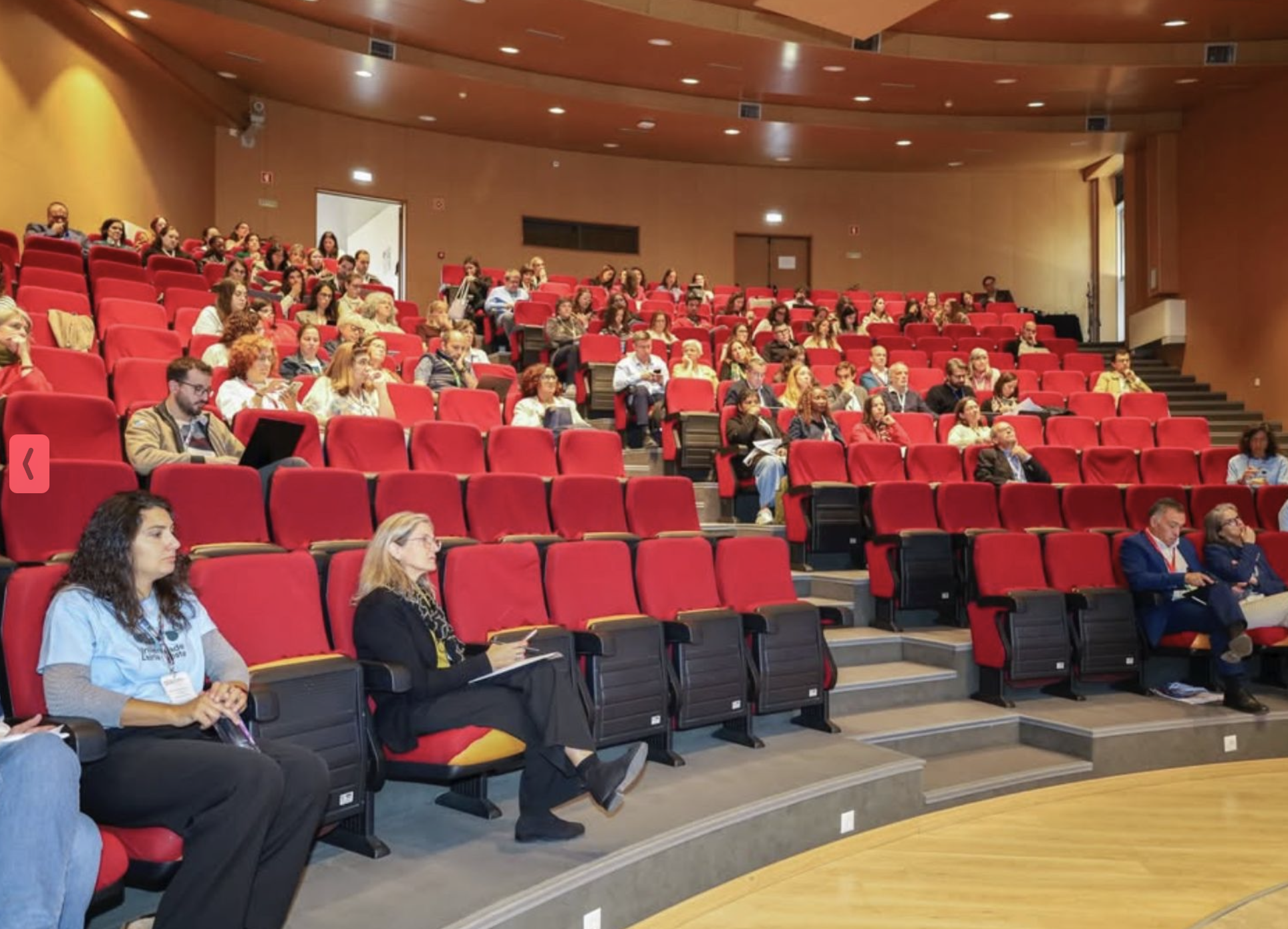
The presentation was very warmly received by the audience. At the end of the session, several participants expressed their appreciation for the insights shared, highlighting how the reflections were applied to teaching practice through a transdisciplinary approach centered on people and their capacity to drive change.
Susana Leonor extends her gratitude to Vice-Rector Professor Sérgio Leandro, Professor Teresa Mouga, and the Sustainable Campus Network for the invitation and this moment of collaborative sharing.